Interior Design Styles Explained: 10 Styles and How to Tell Them Apart
Ten popular interior design styles defined in plain terms, with the palette, materials, furniture and one giveaway detail for each, plus how to choose and mix.
By The Loftshape team7 min read
The short answer
The ten styles people most often ask about are Scandinavian, Japandi, mid-century modern, industrial, coastal, minimalist, modern, traditional, farmhouse and bohemian. You can tell them apart by four things, which are palette, materials, furniture shape and how much is on display. Each also has one giveaway detail, such as tapered wooden legs for mid-century modern or exposed brick and black steel for industrial.
- Four things separate one style from another, namely palette, materials, furniture shape and how much is on display.
- Scandinavian is light and cozy; Japandi is the same idea made lower, darker and quieter.
- Minimalist is defined by how little there is; modern is defined by clean lines and can carry strong color.
- Mid-century modern, industrial and farmhouse each come from a specific time or kind of building, which is why they have such clear tells.
- Transitional is not an eleventh look but the midpoint between traditional and modern.
- To mix two styles, let one lead at roughly 80 percent and keep a shared palette.
An interior design style is a consistent set of choices about color, material, furniture shape and decoration. The names are useful shorthand: say "Scandinavian" to a designer, a store or an AI tool and you get pale wood and white walls instead of a long description. This guide defines ten common styles and gives the quickest way to recognize each.
How do you tell interior design styles apart?
Look at four things, in this order:
- Palette. Is the room light, dark or colorful? Warm or cool?
- Materials. Pale wood, dark wood, metal, stone, rattan, velvet?
- Furniture shape. Straight or curved? Low or tall? Slim legs or solid to the floor? Plain or carved?
- How much is on display. Bare surfaces, a few chosen objects, or layers of pattern and collections?
Most styles can be identified from two of the four. The table summarizes all ten.
| Style | Palette | Key materials | Furniture | The tell |
|---|---|---|---|---|
| Scandinavian | White, pale gray, soft neutrals | Light wood, wool, linen | Simple, light, on slim legs | Pale wood plus cozy textiles |
| Japandi | Warm neutrals, beige, charcoal | Oak or darker wood, paper, ceramics | Low, plain, handcrafted | Low furniture and paper lanterns |
| Mid-century modern | Wood tones with mustard, teal, orange | Walnut, teak, leather | Organic curves, tapered legs | Tapered legs and a sunburst light |
| Industrial | Brick red, black, gray, brown | Brick, steel, concrete, worn leather | Sturdy, metal-framed | Exposed brick and black steel |
| Coastal | White, sand, soft blue | Rattan, jute, linen, light wood | Relaxed, slipcovered | Woven textures in a white room |
| Minimalist | One or two neutrals | Plain wood, plaster, matte surfaces | Few pieces, simple blocks | Empty surfaces |
| Modern | Neutrals with bold accents | Wood, metal, glass | Clean-lined, low | Straight lines, no ornament |
| Traditional | Rich, warm, deep | Dark wood, brass, patterned fabric | Carved, curved, skirted | Symmetry and curved legs |
| Farmhouse | White, cream, black accents | Reclaimed wood, iron, stone | Chunky, practical | Big wooden table, apron sink |
| Bohemian | Many colors, earthy and jewel tones | Rattan, macrame, layered rugs | Mixed, vintage, low | Pattern on pattern, many plants |
The 10 styles, one by one
Scandinavian
The idea: bright, simple, comfortable rooms that make the most of daylight. Palette: white and pale gray walls with soft neutral accents. Materials: light woods such as birch, ash and pale oak, with wool, linen and sheepskin. Furniture: simple, functional pieces on slim wooden legs. The tell: pale wood combined with soft, textured textiles. If a room is spare but still looks cozy, it is probably Scandinavian.
Japandi
The idea: Scandinavian comfort joined with Japanese restraint. Palette: warm neutrals such as beige, stone and clay, with charcoal or black accents. Materials: oak or darker wood, paper, linen, handmade ceramics. Furniture: low, plain and visibly well made. The tell: low furniture and paper lantern lights, with noticeably fewer objects than a Scandinavian room. Small imperfections in handmade pieces are welcome.
Mid-century modern
The idea: the optimistic, practical design of roughly the 1940s to the 1960s. Palette: warm wood tones with mustard, teal, orange or olive. Materials: walnut and teak, leather, molded plywood, some brass. Furniture: gentle organic curves, low sideboards, lounge chairs. The tell: tapered, slightly splayed legs on nearly everything, often under a sunburst or globe light.
Industrial
The idea: the look of a converted factory or warehouse, with the structure left on show. Palette: brick red, black, gray and brown. Materials: exposed brick, steel, concrete, reclaimed wood, worn leather. Furniture: sturdy pieces with metal frames, such as a leather sofa or a workbench-style table. The tell: exposed brick with black steel-framed windows and bare-bulb lighting. Pipes and ducts are left visible on purpose.
Coastal
The idea: a light, breezy room that feels close to the sea. Palette: white and sand with soft blues and greens. Materials: rattan, jute, linen, light or whitewashed wood. Furniture: relaxed and comfortable, often slipcovered. The tell: woven natural textures in a mostly white room. Done well, it does not need anchors or seashells; the light and the materials do the work.
Minimalist
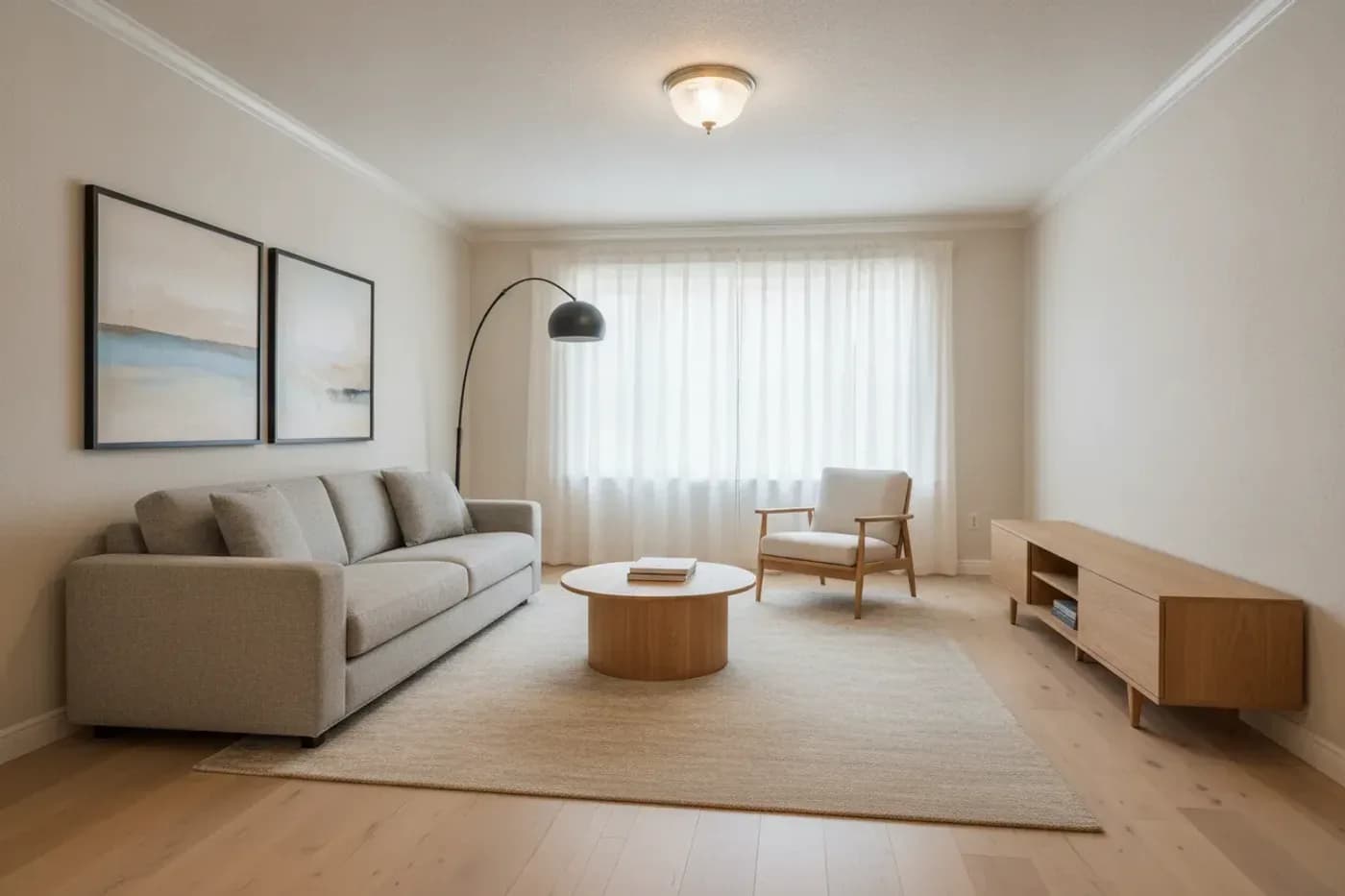
The idea: keep only what is needed, and give it space. Palette: one or two neutrals, with very little contrast. Materials: plain wood, plaster, matte surfaces, hidden storage. Furniture: few pieces in simple shapes. The tell: empty surfaces. Count the objects on the coffee table and the sideboard; in a minimalist room there are one or two.
Modern
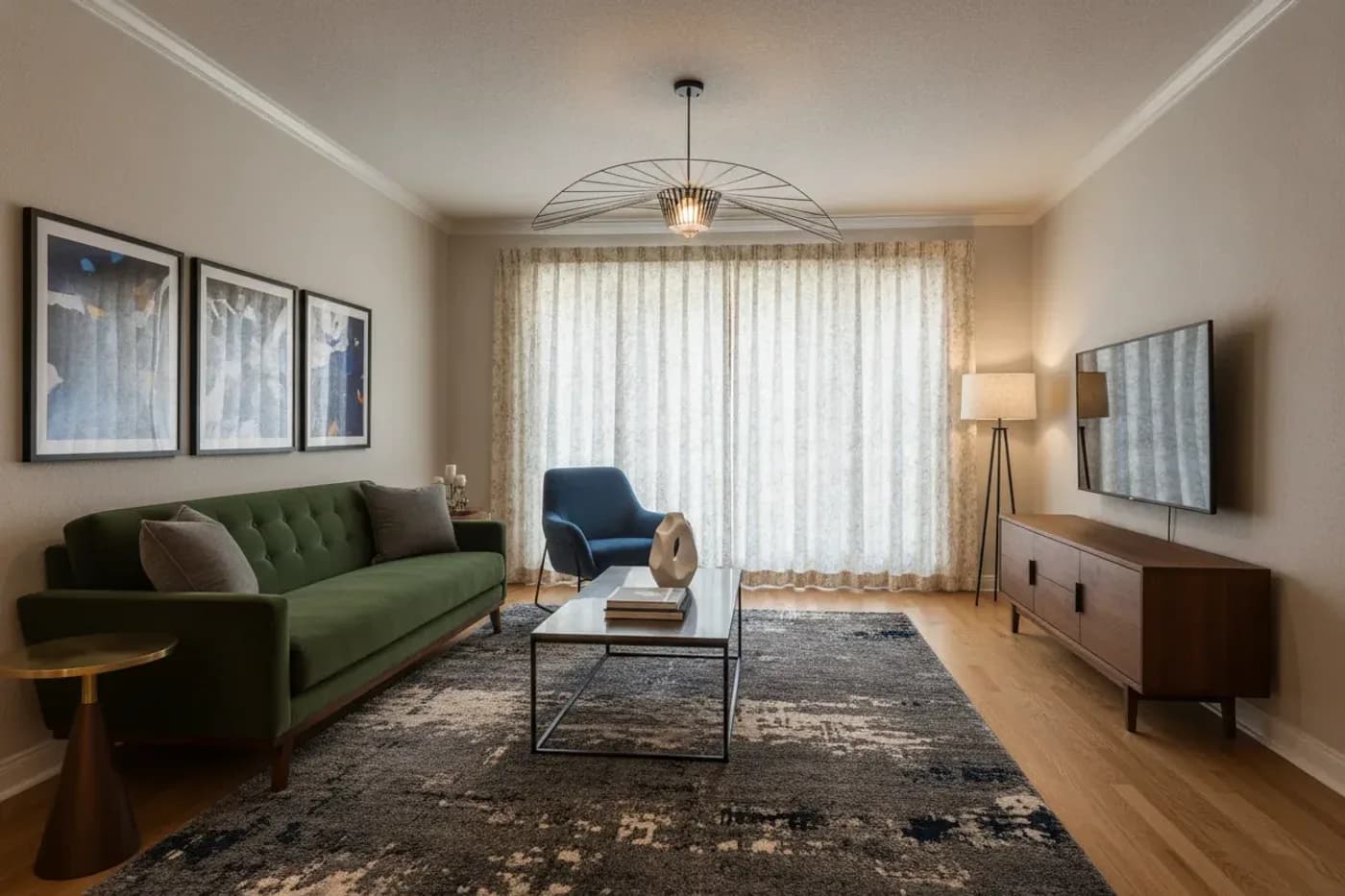
The idea: form follows function, with clean lines and no applied ornament. Palette: neutrals, often with one or two strong accent colors. Materials: wood, metal and glass, with smooth finishes. Furniture: low and clean-lined, with exposed legs or frames. The tell: straight lines and flat surfaces everywhere, yet the room is allowed bold color and statement lighting. That freedom is what separates it from minimalism.
Traditional
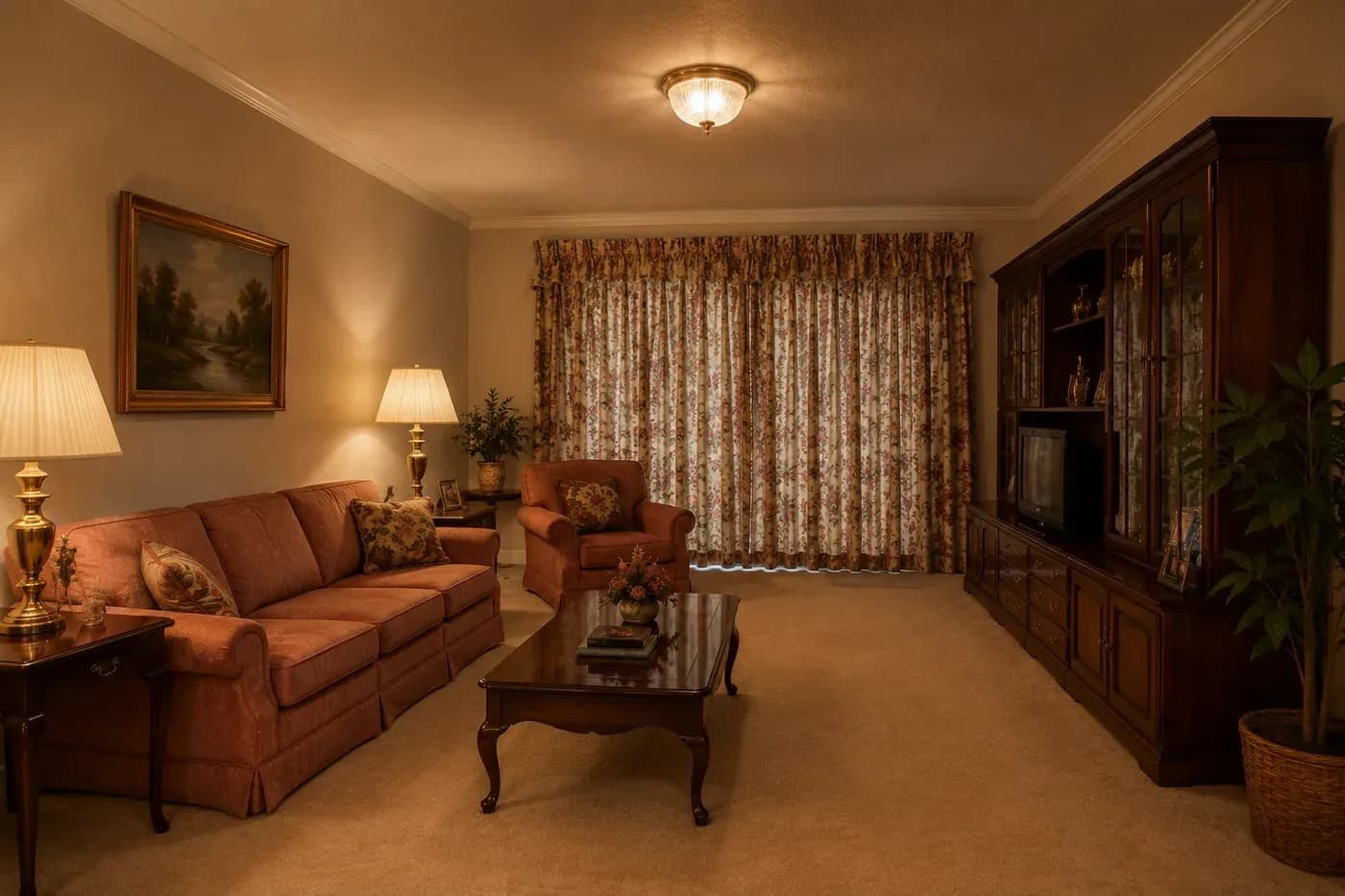
The idea: comfort and order drawn from classic European interiors. Palette: rich and warm, such as cream, burgundy, navy and forest green. Materials: dark woods like mahogany and cherry, brass, patterned fabrics. Furniture: carved details, curved legs, rolled arms, skirted sofas, matched pairs. The tell: symmetry and curves, with a pair of lamps, a framed landscape, crown molding and patterned curtains.
Farmhouse
The idea: the practical warmth of a rural home, updated. Palette: white and cream with black or dark metal accents. Materials: reclaimed or rough-sawn wood, iron, stone, plank-clad walls. Furniture: chunky and hard-wearing, built around a large table. The tell: a big wooden dining table and a deep apron-front sink, often with sliding barn-style doors. "Modern farmhouse" is the cleaner, higher-contrast version.
Bohemian
The idea: a personal, collected room with no rule against more. Palette: many colors at once, mixing earthy tones with jewel tones. Materials: rattan, macrame, layered rugs, embroidered and printed textiles. Furniture: mixed, vintage and often low, with floor cushions and poufs. The tell: pattern on pattern and a lot of plants. Nothing matches, and that is the point.
Where does transitional style fit?
Transitional is the midpoint between traditional and modern. It keeps traditional comfort and proportions, such as a rolled-arm sofa or paneled doors, and strips away the carving, heavy pattern and dark palette. What remains is neutral, tailored and calm.
It is the default look of many newly built homes, because it offends nobody and takes both older and newer furniture well. If a room looks classic in shape but plain in detail, and you cannot place it in the table above, it is probably transitional.
How do you choose a style?
- Start with the building. High ceilings and brick suit industrial. Moldings and a fireplace suit traditional or transitional. A plain new apartment takes almost anything.
- Look at the light. Rooms with little daylight are helped by light palettes. Dark, rich styles need good lighting.
- List what you are keeping. A walnut sideboard or a leather sofa you already own narrows the field quickly.
- Be honest about upkeep. Minimalism needs storage and discipline. Bohemian needs dusting. White coastal upholstery and small children are a hard combination.
- Test before you buy. Collect pictures, or try the style on a photo of your own room.
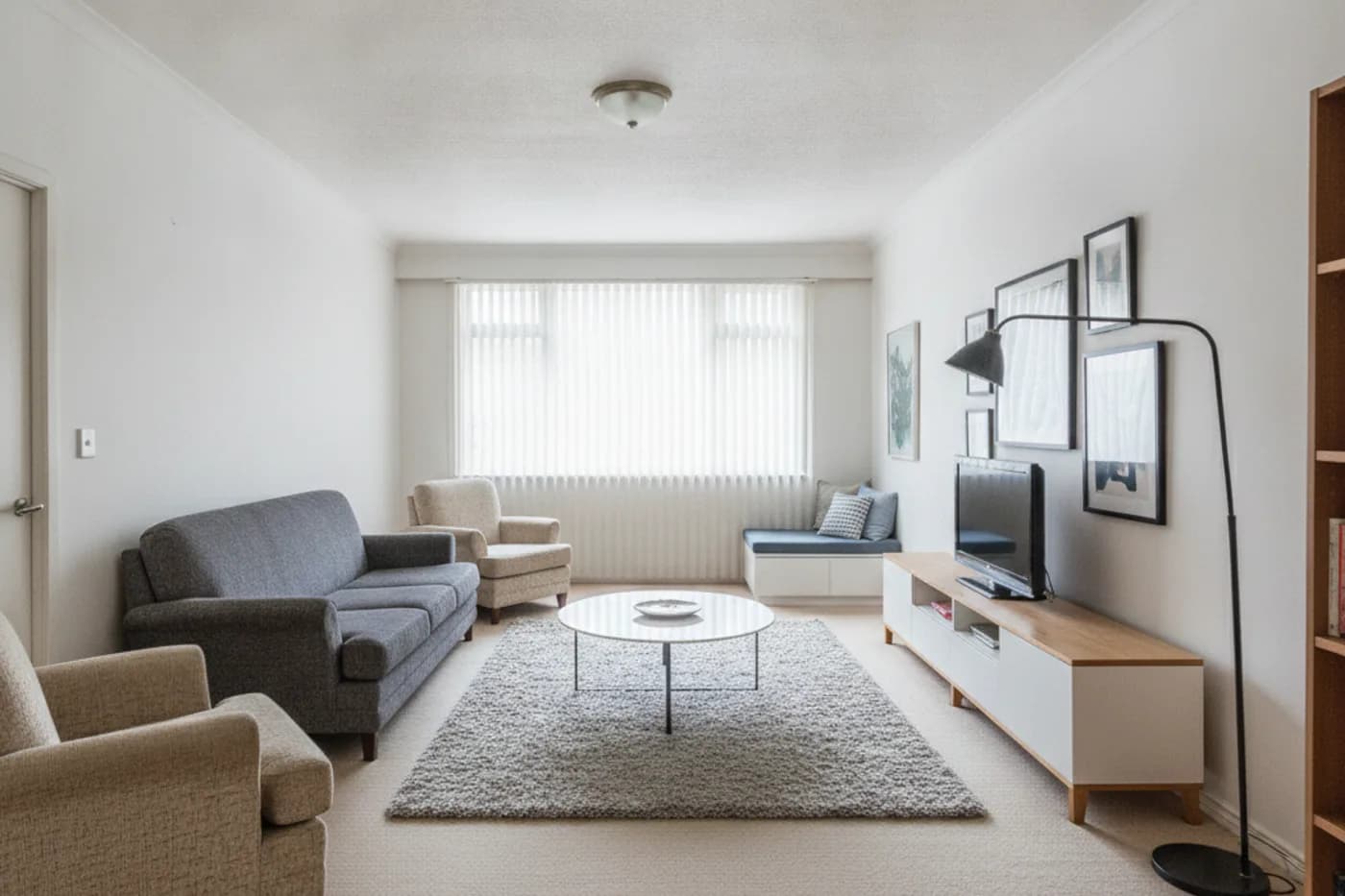
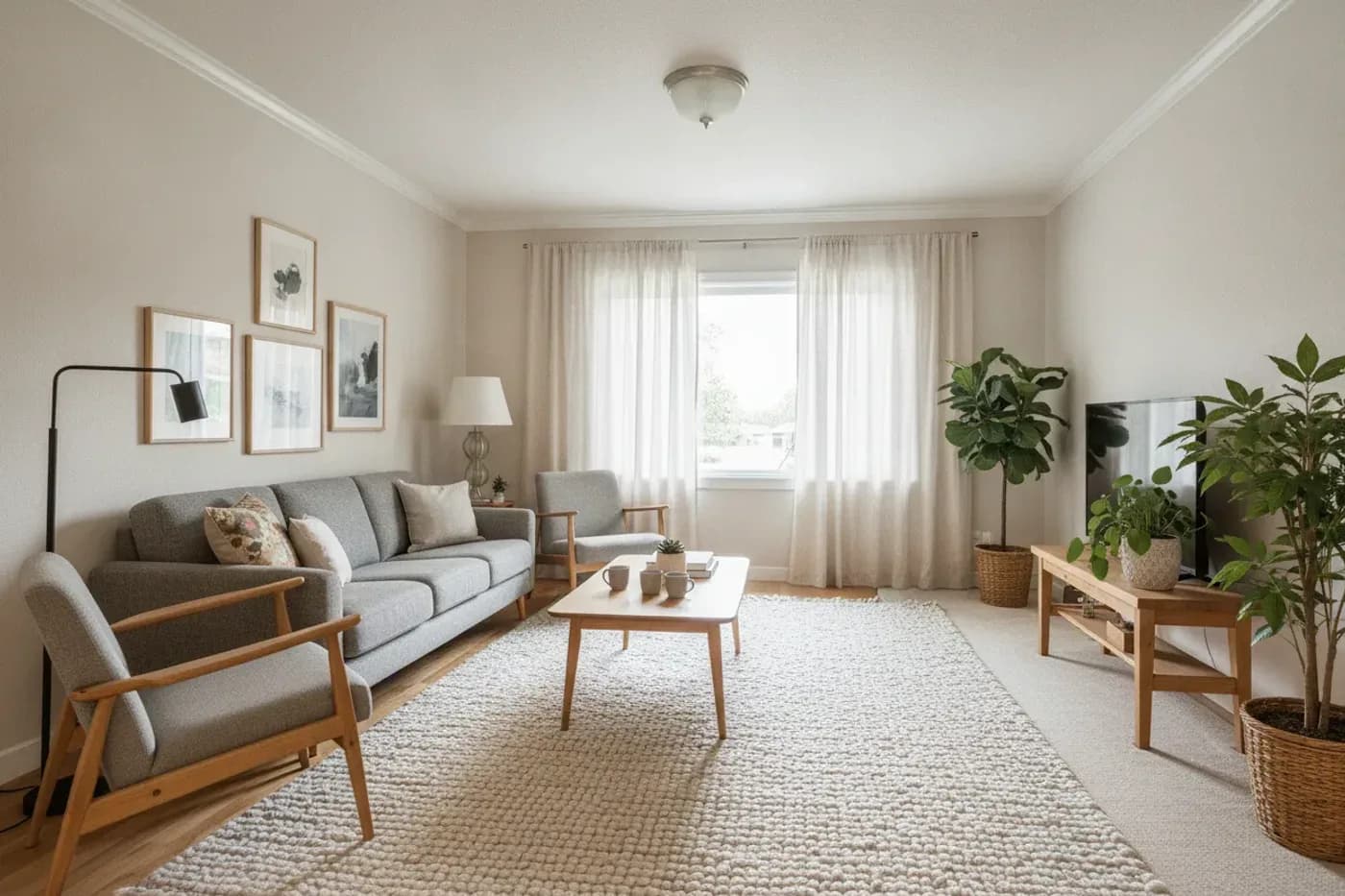
For the last step, Loftshape's interior AI restyles a photo of a room in a chosen style while keeping the walls, windows and layout where they are, and style transfer applies the look of a reference picture. The three restyled rooms in this article were made that way from one photo. These pictures are visualizations: they are not measured, and the furniture in them is not a specific product you can buy. Use them to choose a direction, then shop to real dimensions.
How do you mix two styles?
Most lived-in homes are a mix. A few rules keep a mix from looking accidental:
- Let one style lead. A common rule of thumb is about 80 percent one style and 20 percent the other.
- Share a palette. Two styles in the same three or four colors look related.
- Repeat the accent. One rattan chair looks lost; a rattan chair, a rattan shade and a jute rug look planned.
- Keep the big pieces in the lead style. Sofa, bed and storage set the tone. Mix through lighting, art, textiles and side tables.
- Pair styles that share something. Scandinavian and Japandi share wood and simplicity. Industrial and mid-century share warm wood and leather. Traditional and bohemian share pattern.
Style decides how a room looks. Whether it works is a matter of spacing, and that is covered in furniture layout rules. If the look is for a home you are selling, see the virtual staging guide for how to pick a style for buyers.
Questions people ask
What is the difference between modern and contemporary design?
Modern refers to a design movement of the early to mid twentieth century, with clean lines, little ornament and honest materials. Contemporary simply means what is current, so it changes over time. A contemporary room today often borrows from modern design, which is why the two words get mixed up.
What is the difference between Scandinavian and Japandi?
Both use natural wood, simple shapes and little clutter. Scandinavian rooms are lighter and softer, with pale wood, white walls and plenty of textiles. Japandi adds Japanese influence, so furniture sits lower, the palette is warmer and darker, and fewer objects are on show.
What is the difference between minimalist and modern?
Minimalism is a rule about quantity, meaning keep only what is needed and leave surfaces clear. Modern is a rule about form, meaning straight lines, flat surfaces and no ornament. A modern room can have a green velvet sofa and bold art; a minimalist room usually would not.
Which interior design style is easiest to live with?
Styles built on a neutral base, such as Scandinavian and transitional, are the most forgiving, because new pieces rarely clash with them. Strict minimalism is the hardest to keep up day to day, since it depends on clear surfaces and hidden storage.
Can I mix interior design styles?
Yes, and most real homes do. Pick one style to lead and one to accent, keep the same few colors throughout, and repeat each accent material at least twice so it looks deliberate. Japandi and transitional are themselves well-known mixes.
What interior style is best for a small room?
Light palettes, furniture on visible legs and few objects make a small room feel more open, which points to Scandinavian, Japandi or minimalist. Dark, heavy or highly patterned styles can work, but they take more care with lighting and furniture size.